Communications · Journey map · 2 min read
Emails that reduce calls
- Role
- Design lead, with ownership of the content and implementation
- Company
- Frávega
- Period
- 4 months
- Team
- 1 product designer and 1 UI designer
- The problem
- Emails in the same sequence contradicted each other and led to calls asking about shipping.
- What I decided
- Map the entire journey, define a single structure for the emails and prioritize by groups.
- The result
- We redesigned all the communications in the purchase flow.
The challenge
Each team loaded its own emails and triggers into the communications platform, without seeing the rest of the journey. There were no duplicate emails, but there were inconsistencies: one email said one thing and the next one contradicted it.
Customer Service found that a significant share of calls were to ask when the order would arrive or whether it was ready for pickup.
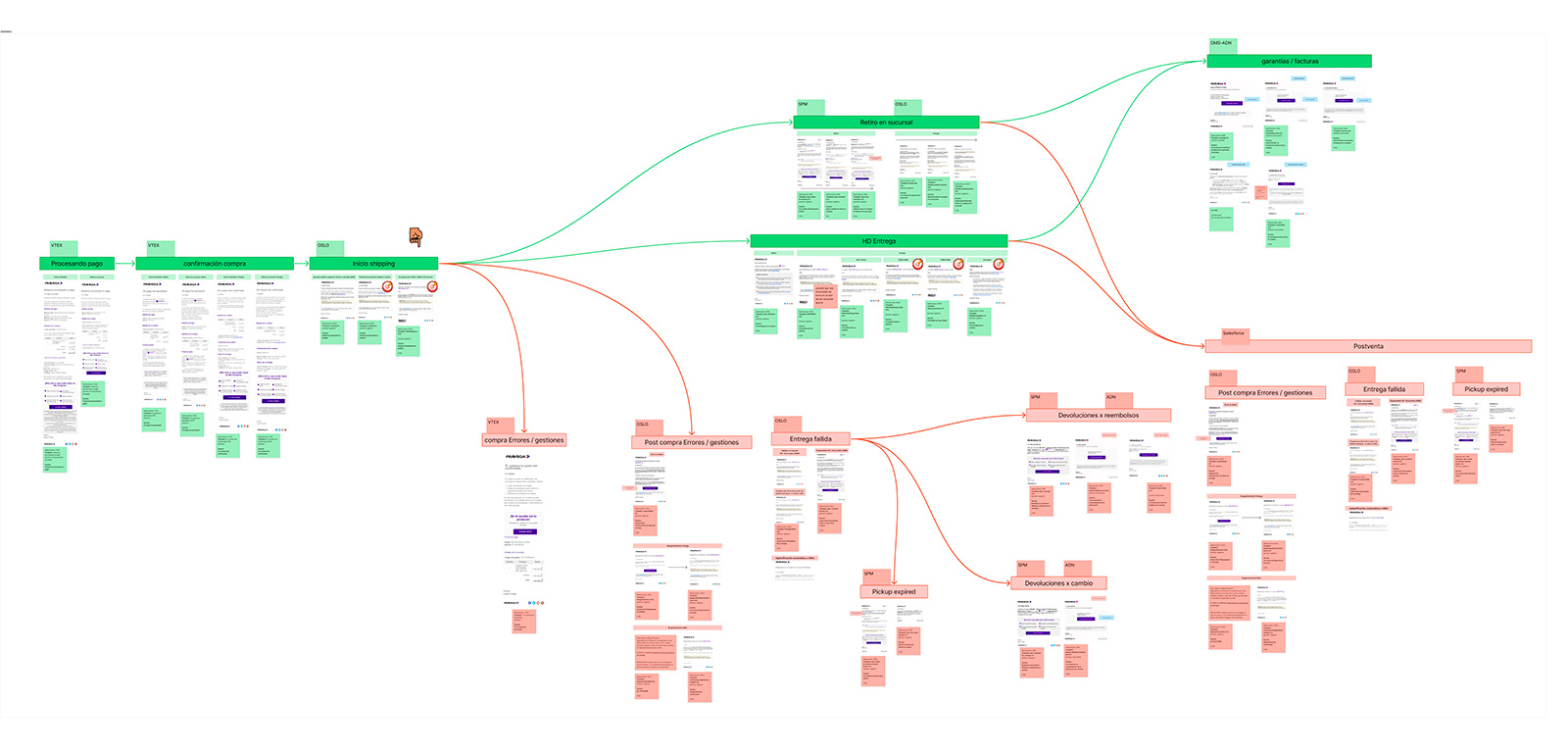
Mapping turned out to be more complex than expected: with no documentation and no single owner of the journey, the team considered the audit finished three times and each time new cases came up.
My contribution
- Role: I led the design with direct ownership of the content and its implementation.
- Scope: the entire e-commerce communications journey, coordinated with Customer Service and Shipping.
Key decisions
I mapped the journey as a decision tree, with one branch per situation: payment, confirmation, dispatch, store pickup, home delivery, delays, returns and warranties. That revealed dependencies a list didn't show.
I built an AI tool to audit content and design, trained on the voice and tone guide, the brand glossary and content best practices. It reviews an email in its context within the journey and returns feedback with a concrete proposal.
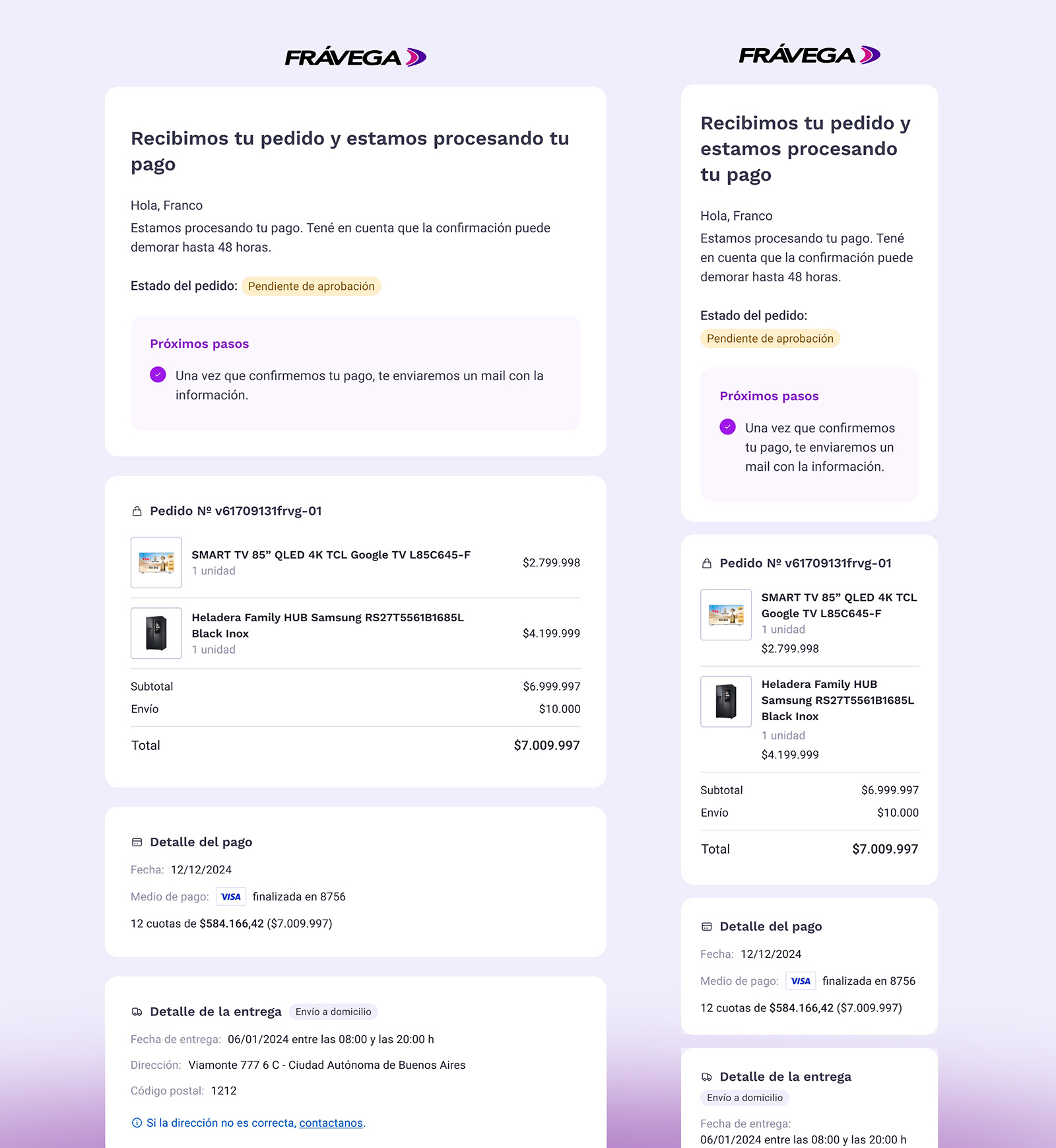
I defined a structure for every transactional email: the news, the action, a moment of empathy, access to post-sale and the footer.
I negotiated with Shipping to prioritize the initiative the following quarter, using the projected savings in calls as the argument.
We implemented by groups of emails rather than one by one: first the standard flow, from confirmation to delivery, and then rescheduling, payment errors and requests.
Results
- -15% calls to the customer service center in the first month and -20% cumulative by the second.
- -5% negative mentions about customer service in satisfaction surveys.
- 2 fewer redundant emails and 100% of the mapped communications implemented.
Learnings
Don't underestimate complexity: what looked like a template ended up requiring three audits and coordination with Shipping's systems. AI solved a key task, the content, in a team without dedicated specialists.
If I started it today, I'd bring in all the teams involved from the beginning to uncover the dependencies earlier.