Design system · Consistency · 2 min read
From a Figma library to a code standard
- Role
- Process lead, coordinating UX, design system, engineering and product
- Company
- Frávega
- Period
- 1 year
- Team
- 4 product designers, 1 UI lead and 2 UI designers
- The problem
- Inconsistent interface and components coded several times by different teams.
- What I decided
- Use a technical refactor as an opportunity to make the DS the standard for all new development.
- The result
- 2x development speed, -35% front-end bugs and 39 organisms in use.
The challenge
Inconsistency: the interface was visually inconsistent and outdated, which hurt brand perception and usability.
Rework: without centralized components, the same component was designed and coded several times by each development team.
Opportunity: a planned technical refactor opened a short window to adopt the design system as mandatory, and quickly.
My contribution
Role: I led the transformation and supported the UI lead in her first leadership role, helping her decide when to delegate and when not to.
Scope: all new e-commerce development.
Key decisions
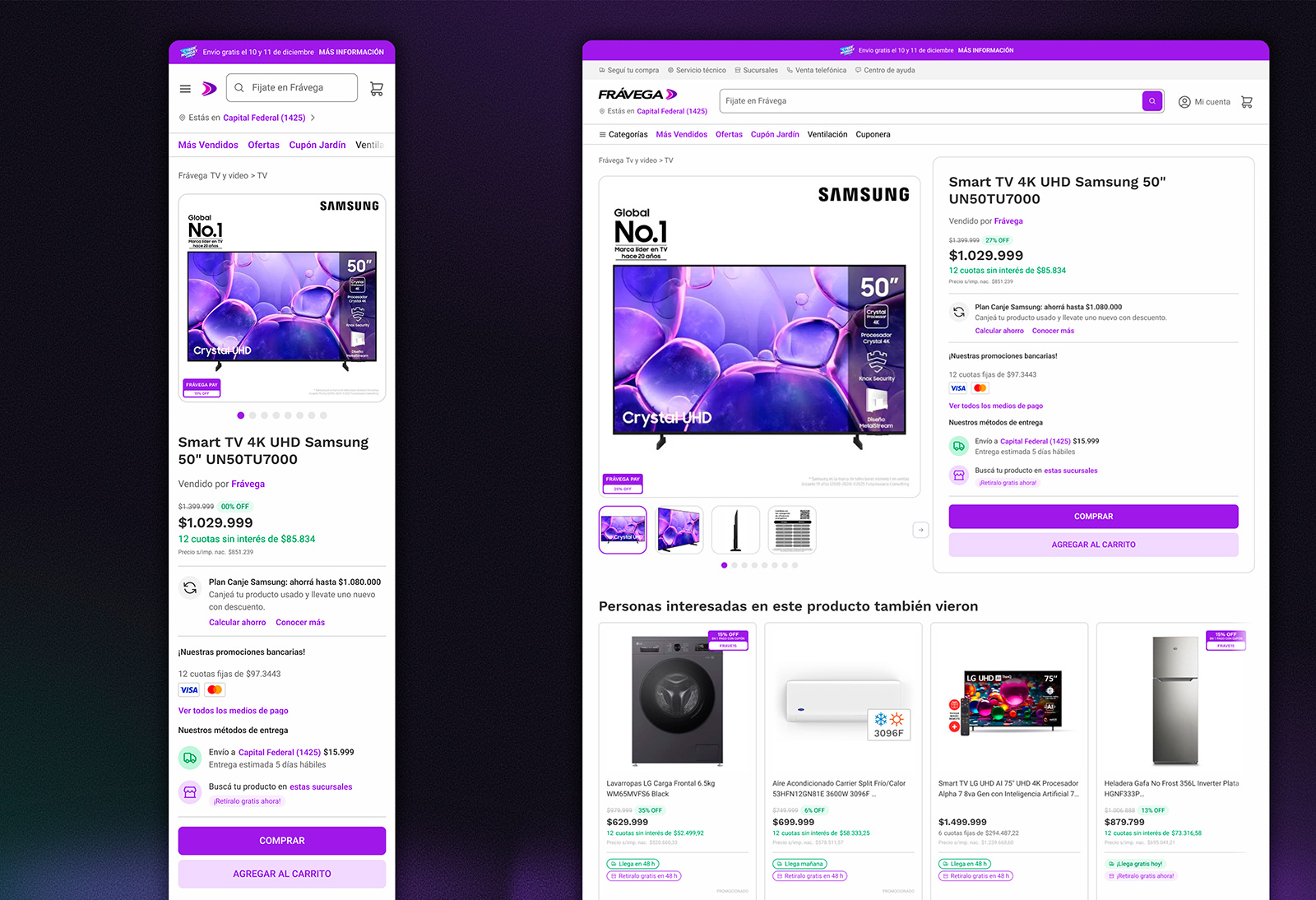
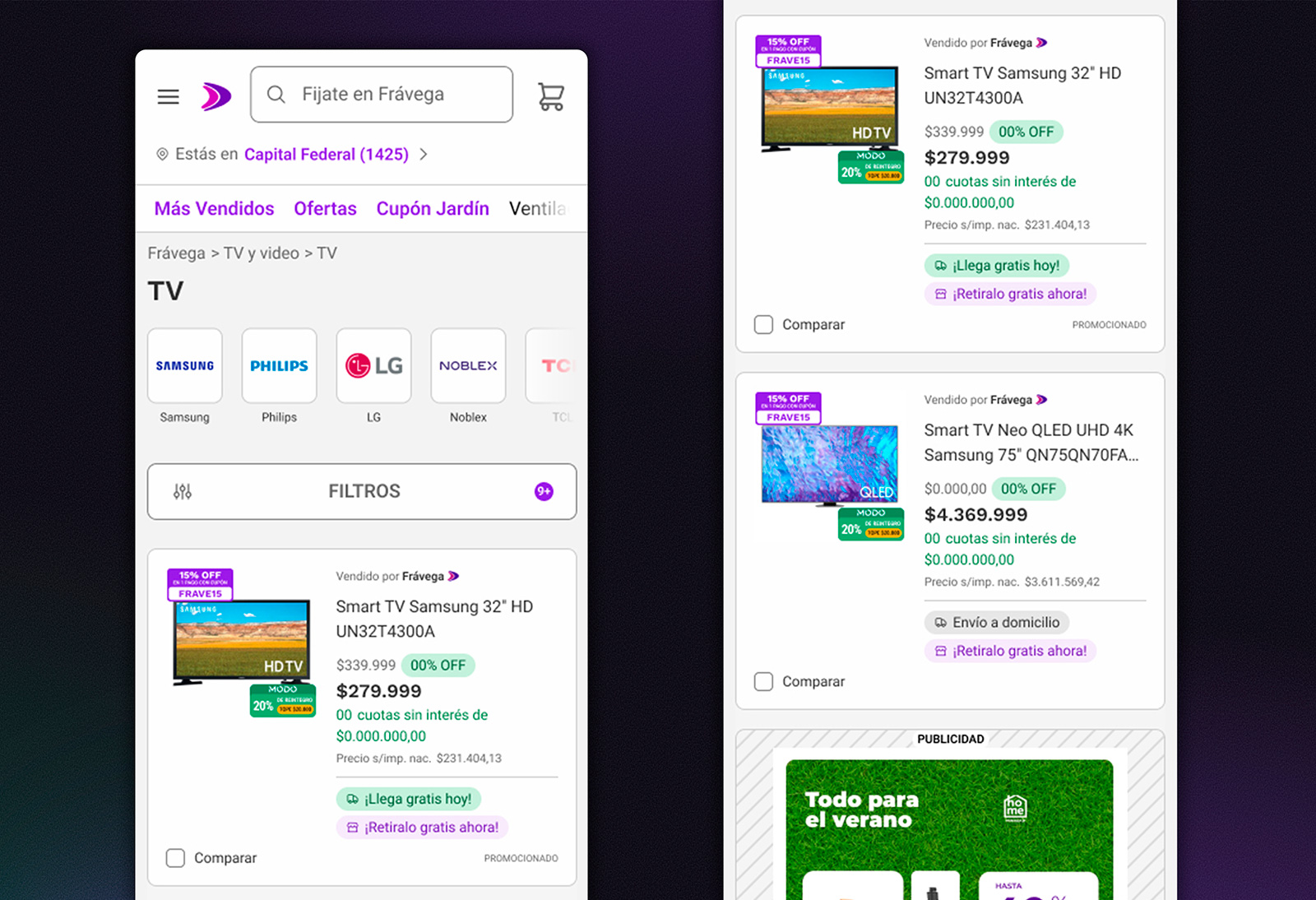
I changed the scope from "primitive component" to "task-oriented organism": for example, a single product card that adapts to listings, featured spots, product pages, showcases or the cart, instead of one version per screen.
I drew the line between new and evolutionary development: the Design System is the standard only for new work, because in evolutionary work, already in production and with tight deadlines, building components from scratch would have created bottlenecks.
I organized the UX team to build in parallel: standard documentation, a set of organisms per team member, a weekly Q&A slot and a quality loop where the Design System team designs, development builds the component in code and UX audits the implementation.
I negotiated the technical structure with architecture and development, prioritizing quality, consistency and accessibility.
Results
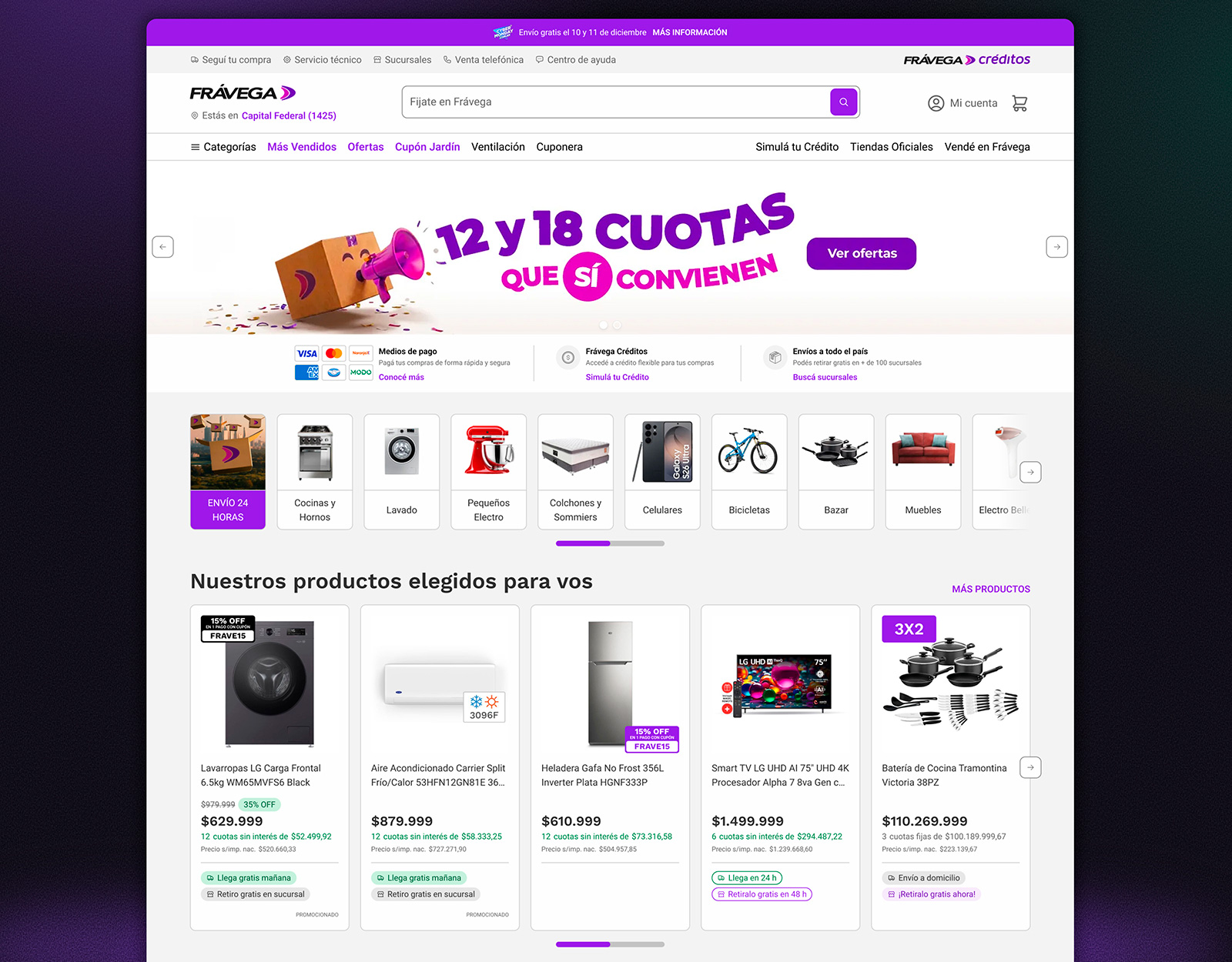
39 organisms in use on the home page, product listing and product page, and CMS landing pages. Header and footer affect every flow.
2x speed in development teams and -35% front-end bugs.
All components meet AA accessibility level and follow the SEO structure.
Other teams, such as Post-sale, already reuse components, and a help channel sustains adoption with quality.
Learnings
When I lead through someone with more technical expertise than me, my role is to organize and prioritize: unblock conflicts, negotiate between teams and give that person room to lead with their own judgment.
If I started it today, I'd agree on concrete deliverables from the beginning and better define each discipline's role.
Next step: extend Búmeran to the apps.